
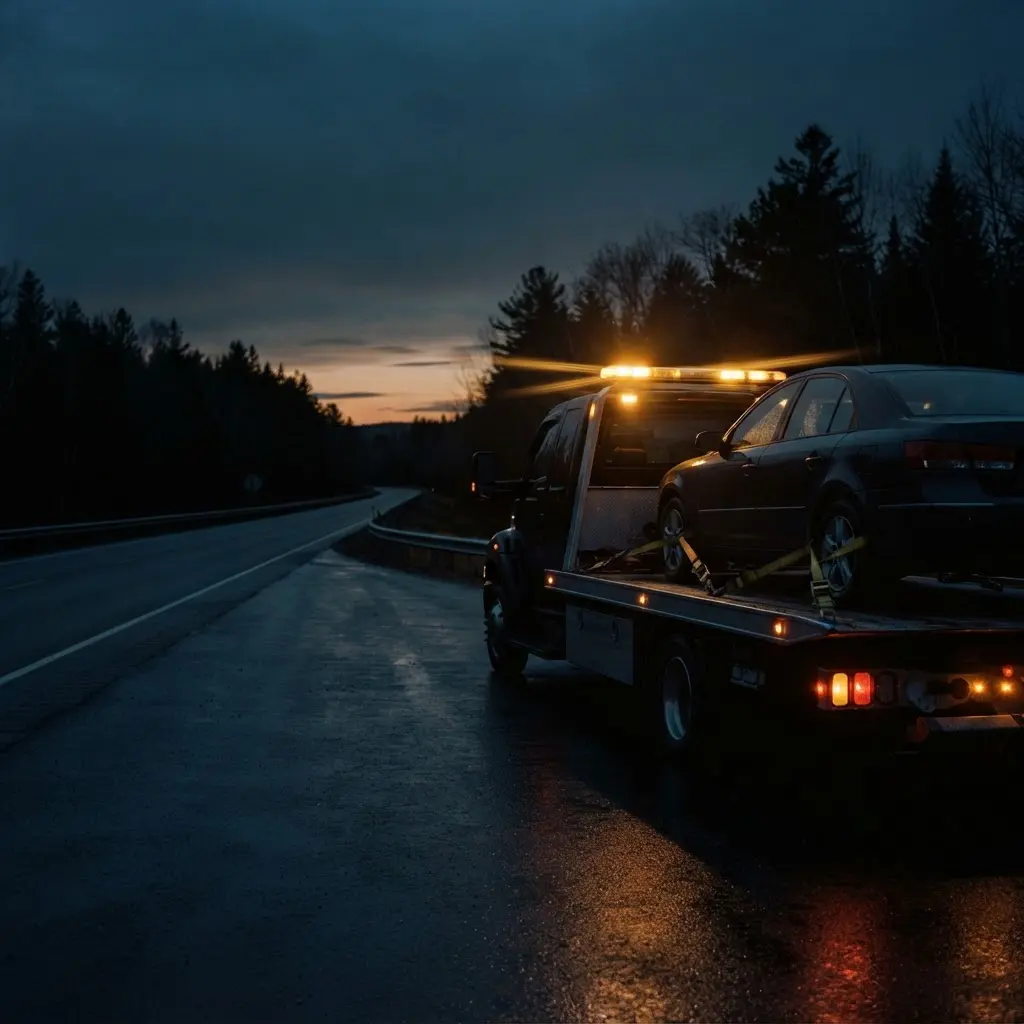
Towing Marketing for Companies That Get the Call at the Roadside
Towing marketing is the work of being visible, accurate and ready to take the call at the moment a driver needs a truck. The customer is often standing beside the car, searching on a phone, and will call one of the first credible results. This page explains what our campaign builds for a tow company: the profile, the pages and the measurement. Our proof comes from our mobile mechanic campaigns, which run on the same method, and we say so where we use it.
Why towing is different on Google
Towing is one of the most urgent searches in local services. The customer is not comparing for days. Position on the map, the rating, the hours shown and a working call button settle the job before the website loads, which makes the Google profile the front line of towing marketing. The website's job is to tell Google where the company belongs and to answer the customer who scrolls further.
A tow company's location is also unusual. Some operators have a yard that customers visit, and Google's guidelines say a business that serves customers at its address may show it. Others work entirely from the road and hide the address. In both cases Google measures distance from the verified address, and a driver broken down fifteen miles away sees different results than a driver next to the yard. Our guide to Google Maps ranking factors explains the mechanism.
For that reason we check map positions from a grid of nine points, two miles apart, centered on the profile's verified location, every week. A single check from the office describes one place. The grid shows how the company appears across the territory its trucks actually cover.
The calls a tow company is searched for
Towing is a family of services that share a truck. The searches that reach a company include a tow from a breakdown, a jump start, a tire change, a lockout, fuel delivery, a vehicle stuck in a ditch or lot, accident recovery, and transport for motorcycles, equipment or a car that has to move from one place to another. Private property and impound work form a separate group, with a property manager or an owner searching in a calmer frame of mind than a driver on the shoulder.
Searches also carry place in a way that other trades do not. A driver on a highway often searches by the road or the exit, not the town, so corridors matter as much as city names. A driver in a parking lot searches the neighborhood. We name the places the trucks truly cover on the pages, and we leave out any service or road the company does not serve. The answer the driver needs is short: do you do this, do you cover here, and will you pick up the phone.
One company, several kinds of call
A tow company serves more kinds of customer than a single homepage can hold. Typical calls include emergency towing, roadside help such as a jump start, a tire change or a lockout, accident recovery, motorcycle transport and equipment hauling. Each kind is a different search from a different person, and each needs a different answer.
We build a page for each service the company actually performs, and we leave out services it does not offer. A roadside page says what the driver can expect and what to have ready. A motorcycle page is about the right equipment for that job. A page for private property and impound work speaks to a different customer from the driver on the shoulder. The local SEO websites service describes the build.
We never promise response times or services the operator cannot keep. A page that makes a promise the trucks cannot meet at two in the morning produces the reviews that undo the rest of the work.
The page set we would build
The page set starts with the home page, then one page for each service, one page for each town and corridor the company serves, and combination pages of a service and a town where search data shows people looking. We add an FAQ page and a library of articles. Each page owns one search.
Town pages mirror the service-area list on the Google profile, which can list up to 20 service areas, and Google says the overall area should not extend farther than about two hours of driving time from where the business is based. We build pages only for places the company genuinely serves, and each carries something that cannot be copied to a sibling page: a job photo from that place, a review that names it or a first-hand local fact. Our guide to website structure and depth explains where city pages go wrong.
Every money page sits within two clicks of the home page, and every page has its own individually written title and description. The phone number sits within reach on every page, because the visitor who reaches the page usually wants to call.
The profile work we would build
The primary category is the strongest single factor in Whitespark's 2026 survey of local search practitioners, so we choose it with care, based on how customers describe the work, and add additional categories only for work the company really does. We keep the services list, attributes and description current and never add keywords to the business name.
Hours carry real weight for a tow company. Being open at the time of the search ranks fifth in the same survey, and after-hours searches reward a profile that is open when the customer searches. We keep the hours on the profile, on the website and in the structured data identical, and we create a 24-hour page only where the company's real hours support it. Claiming round-the-clock service and missing the night calls would be the fastest way to lose a reputation.
The profile gets a new real job photo every day, checked and never repeated, and 4 posts a month. Posts rank very low in the same survey, so we write each one to convert: one service that has its own page and a button that carries the call. We write a reply for every new review, and the owner posts it. A review from a stranded driver who was helped promptly is exactly what the next stranded driver is looking for. We never ask customers for reviews on a client's behalf and never buy or incentivize them. The Google Business Profile service and the review service explain each part.
How the profile is built, in order
For a tow company the first decision is the address. A yard that customers visit may be shown, because Google's guidelines allow a business that serves customers at its address to show it, and a company that works only from the road hides the address and lists the places it serves. We confirm the verified address, then choose the primary category and any additional ones for work the company really does, such as roadside assistance alongside towing. The services list follows the pages on the website, the description says what the company does and where, and the phone number on the profile, the site and the structured data is identical.
Hours come last and carry the most risk. If the company answers around the clock, the profile says so and the phone is answered. If it does not, the profile shows the real hours. We would rather publish true hours and a working call button than a promise the phones cannot keep.
What the monthly work includes
Each month, each business gets 8 off-site articles and 2 on-site articles of 800 words or more, each written from real jobs and aimed at a real search. It also gets 4 Google Business Profile posts, a new job photo every day and a written reply for every new review.
We keep the profile current, update the website from real searches and the data in Google Analytics and Search Console, check map positions weekly and deliver a monthly report built from Google's own numbers. The tracking and reporting service explains the measurement. Every campaign is tailored to the individual business and adjusted month by month as the data comes in. Nothing is set up once and left.
What the same method has produced
Our measured results come from our mobile mechanic campaigns, which use the same approach for a business that travels to the customer. The mobile mechanic marketing page describes the campaign. The clearest match for towing is the one built around hours and the map.
Any Hour Mobile Mechanic in Plano, Texas is open 24 hours Monday to Saturday, and its pages and profile say exactly that. It holds position 2 at all nine points of our weekly map grid for "mobile mechanic plano", checked on 5 October, 12 October, 19 October, 2 November and 9 November 2026, with positions 2 to 3 on 26 October. Its profile recorded 224 calls in August 2026, its highest month on record. Read the Plano case study.
DFW Mobile Auto Mechanic Pros in Fort Worth, Texas averaged position 3.6 in regular Google results for "mobile mechanic dfw" from July to October 2026. Read the Texas case study.
Backyard Mobile Repair in St Paul, Minnesota saw its monthly profile actions rise from 93 in March 2026 to 252 in October 2026. Read the Minnesota case study.
We promise no ranking and no revenue, because Google decides rankings.
The business side of a tow company
A tow company lives on how it handles volume and timing, and working with us includes advice on that side, because we see the search demand, the call and message volume and the competitors in each market every month, and we work only with this kind of business. It is advice, not a promise, and every decision stays with the owner.
Pricing structure is the first area. A tow operator decides how to build a charge from a hook-up amount, a rate for distance, a different rate for nights, weekends and holidays, and a policy for waiting time at the scene. Roadside services such as a jump start or a lockout may be priced as a flat call. The trade-off is between quoting up front, which wins the driver who is comparing options, and quoting on the scene, which protects the operator when conditions are unknown. Whichever the company chooses, the website and the person who answers the phone should say the same thing. Our advice on pricing your services and the guide on how to price mobile service work go through the options.
Capacity is the second, and in towing it shows up as overlapping calls. When two drivers call at once and there is one truck, one of them waits or calls someone else. As an example, labelled as an illustration and not a client result, a company that keeps missing calls while its one truck is out could add a second truck and a driver, or could add a dispatcher who answers every call, sends the nearest truck and keeps the customer informed. A dispatcher can also make round-the-clock hours possible without the owner answering every night. We help owners read their call volume to see which comes first. See the advice on hiring and growing a team and the guide on when to hire your first technician.
Service area and hours are the third. The territory a tow company can honestly cover is set by how fast a truck can reach the caller and return, and the profile, the pages and the phone script should describe that territory the same way. Rotating shifts, an on-call schedule or a partner for the far end of the map are all ways owners handle hours they cannot cover alone. The advice on business model and service area, the business growth advice hub and the guide to the mobile service business model cover these choices.
Pricing
The Full Package is $325 a month, with no one-time payment and no contract: you pay month to month. It covers everything in the monthly work above, the website, hosting, the edits you ask for and ongoing profile management. You own everything we build, and we transfer it all to you if you ever leave.
The Website Only plan is $200 one time and then $50 a month. It is a fully built-out, optimized website that you approve before it goes live, hosted by us, with the edits and updates you ask for and a free one-time optimization of your Google Business Profile. The pricing page shows what each plan includes, and the local SEO websites service describes the build.
Related reading
Next step
A free 1 on 1 marketing consultation is a free, one on one conversation with us about your marketing, where we look at your Google listing, your website and your local market together and lay out what we would do. It is also the place to talk through your hours, your pricing and your plans for more trucks. See also the Plano case study for a business that is open at night.
Call or text us at (712) 251-1967.
Email us at garinfroehlich37@gmail.com.
FAQ
For each kind it actually takes, yes. Emergency towing, roadside help, accident recovery and motorcycle transport are different searches from different customers. Whitespark's 2026 survey ranks a dedicated page for each service first among local organic factors. We leave out any service the company does not offer, so each page can promise only what the trucks deliver.
Only state what is true. Google measures whether a business is open at the time of the search, and customers act on the hours shown. We set the same hours on the profile, website and structured data, and build a 24-hour page only where real hours support it. A false claim turns into reviews that undo the rest of the work.
Google's guidelines say a business that serves customers at its address may show it, and a business that does not should hide it and list service areas instead. Either way, Google measures distance from the verified address. We check that choice during the build and measure map positions from a grid centered on the verified location.
A profile can list up to 20 service areas, and Google says the overall area should not extend farther than about two hours of driving time from where the business is based. Listing a town does not by itself rank the company there, so we add pages on the website for the places the company genuinely serves.